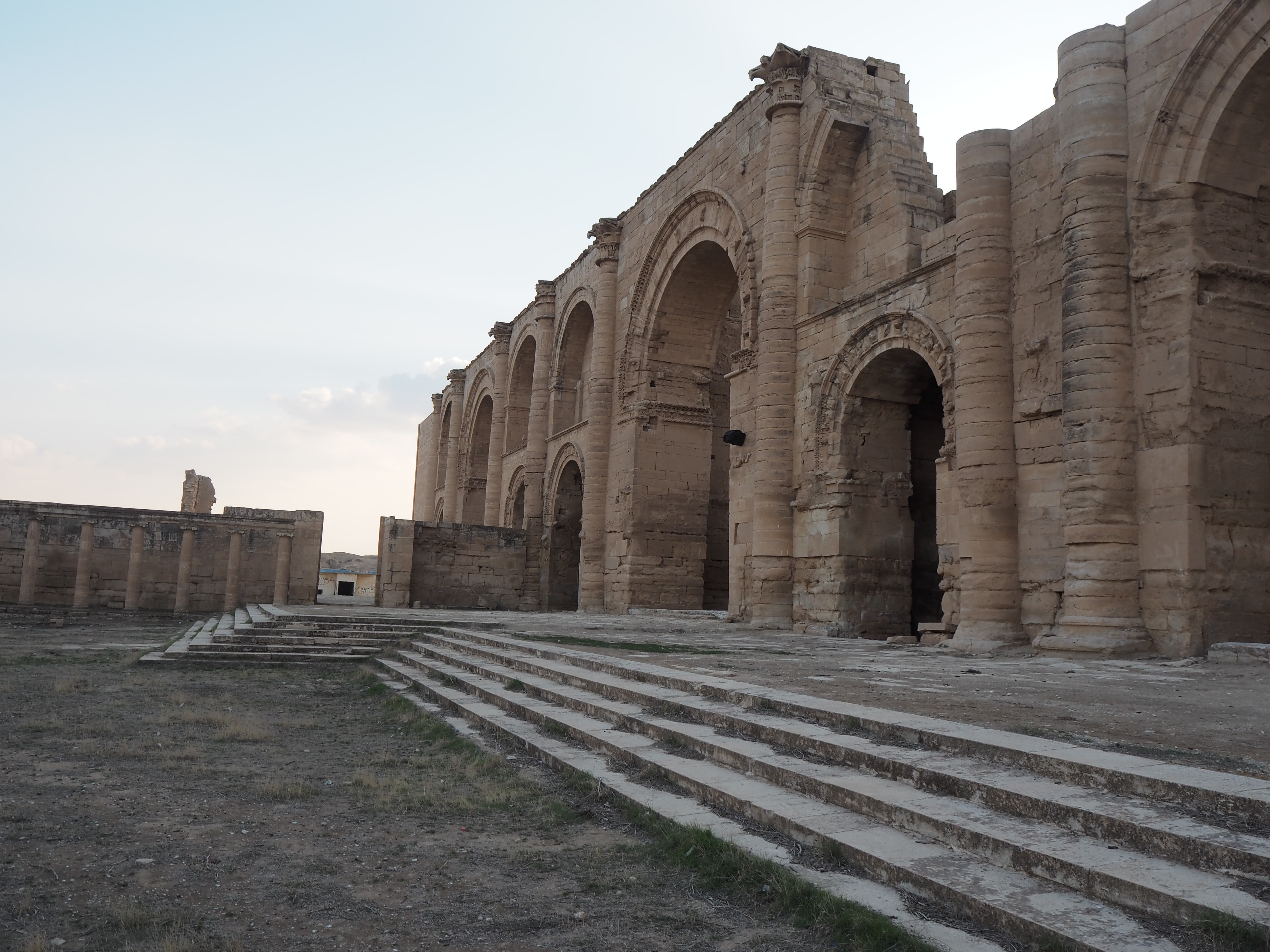
The Fortifications of Hatra
The project aims to produce a comprehensive study of the fortifications of Hatra, based on data recorded by the Italian Archaeological Expedition of the University of Torino between 1986 and 1989. Located in northern Iraq within a semi-arid steppe environment, the site originated as a village between the late fourth and early third centuries BCE. Its principal phase of urban development occurred between the first and third centuries CE, when it became the capital of a Parthian-allied buffer state. The city was ultimately destroyed in 240/241 CE by the Sasanian army and was never subsequently reoccupied.
At its apogee, Hatra extended over approximately 300 hectares and was structured around a vast central Temenos housing the principal temples, encircled by residential quarters interconnected through a complex street network. Despite multiple international excavation campaigns, only a limited portion of the site has been systematically investigated. The fortifications constitute one of Hatra’s most significant features, both in terms of their remarkable state of preservation and their longstanding reputation for impregnability in Roman literary sources.
The defensive system comprised a main pseudo-circular wall with regularly spaced towers, supplemented by an outer wall and ditch, as well as a probable inner defensive circuit added shortly before the Sasanian siege. Monumental gates and towers, some designed to accommodate artillery, attest to a high level of military engineering. The publication, directed by Enrico Foietta (University of Torino), will offer a new, comprehensive analysis of the fortifications, examining their characteristics, construction techniques, primary and secondary functions and chronology. Specialist appendices will address the illegal trenches on the western bastion (Massimo Vidale, University of Padova) and the graffiti discovered at the city gates (Ilaria Bucci, Durham University), thereby enriching the current understanding of these important defensive structures.