
Tell al-Wilayah: the 2002 Iraqi State Board of Antiquities Excavation Season and its Wider Context
This project will support the publication of a comprehensive monograph on Tell al-Wilayah, a major archaeological site located in Wasit Province in Southeastern Iraq. Tell al-Wilayah was first excavated by Iraqi archaeologists in 1958, and further seasons were carried out in 1999, 2000, 2001, 2002, and 2007 by the Iraqi State Board of Antiquities. The 2002 season, directed by Aeid Al-Taei, uncovered over 50 cuneiform tablets, 61 stamp and cylinder seals, bronze weapons, ceramics, and important architectural remains dating primarily to the Early Dynastic and Akkadian periods. Forty of the clay tablets from this excavation were treated in the Arabic language doctoral dissertation of Dr Abather Saadoon under the primary supervision of Professor Munther Ali. The forthcoming volume will present the results of the 2002 season, while integrating them with data from earlier and later campaigns to offer a broader historical, archaeological, and environmental analysis of the site’s significance. It will also address wider issues such as the Early Dynastic-Akkadian transition, the development of urban settlements, and the identification of ancient cities such as Keš and Irisaĝrig.
The project is led by Dr. Christina Tsouparopoulou (UKSW Warsaw and Durham University) and Dr. Mark Weeden (University College London), in close collaboration with Iraqi scholars Dr. Abather Saadoon (Al-Muthanna University), Aeid Al-Taei, Ahmad Aziz Salman, and Aqeel Almansrawi from the State Board of Antiquities and Heritage. Together, the team brings a multidisciplinary approach combining archaeology, epigraphy, landscape archaeology, and historical geography. The findings will be published in an open-access English-language monograph, complemented by an Arabic-language compendium to ensure accessibility to Arabic-speaking audiences and to strengthen the dissemination of Iraqi-led archaeological research.
Tell al-Wilayah has suffered significant looting and destruction, particularly after 2003, severely damaging its archaeological layers and leading to the loss of many excavated artefacts. By publishing the results of the excavations, this project aims to preserve critical information about the site’s history and contribute to the broader efforts to document and protect Iraq’s endangered cultural heritage. The volume will be an important new resource for scholars and the wider public, deepening our understanding of the political, administrative, and environmental developments of Southern Mesopotamia during the third millennium BCE.
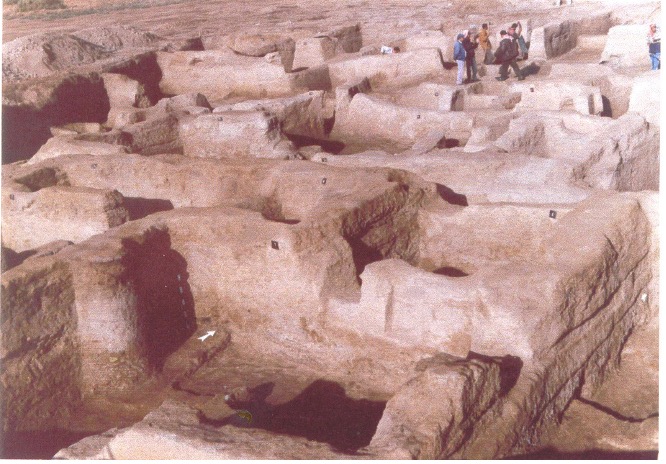
Excavations at Tell al-Wilayah, Wasit Province, Iraq, during the 2002 field season led by the State Board of Antiquities. © SBAH, Tell al-Wilayah Excavation.
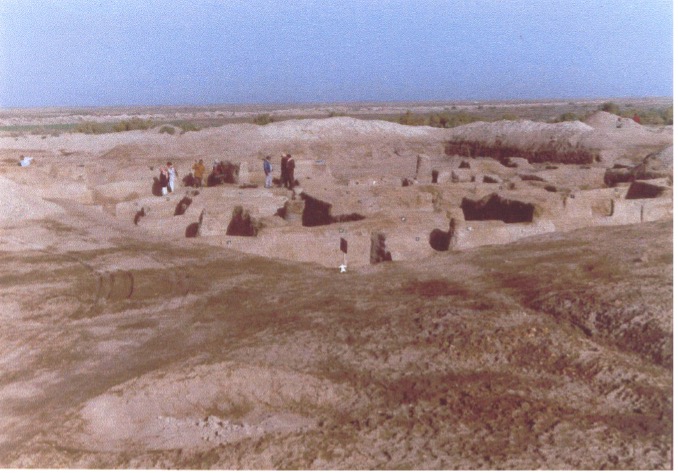
Excavations at Tell al-Wilayah, Wasit Province, Iraq, during the 2002 field season led by the State Board of Antiquities. © SBAH, Tell al-Wilayah Excavation.

Golden ring IM 170688 from Tell al-Wilayah, photograph courtesy of the Iraq Museum © Iraq Museum / Tell al-Wilayah Project.

Golden ring IM 170688 from Tell al-Wilayah, drawing by Dr Zenobia Homan for the Tell al-Wilayah Project © Tell al-Wilayah Project.

Photograph of IM 184415, courtesy of the Iraq Museum. Early Dynastic amulets made of shell, found in ‘room 3 below purification basin’. [Note this numbering will change] © Iraq Museum / Tell al-Wilayah Project.

Commissioned drawing of IM 184415 by Dr. Zenobia Homan for the Tell al-Wilayah Project. © Tell al-Wilayah Project.

One the cuneiform tablets recovered during the 2002 excavations at Tell al-Wilayah, IM 183925. The texts document administrative and agricultural activities. © Iraq Museum / Tell al-Wilayah Project.

One the cuneiform tablets recovered during the 2002 excavations at Tell al-Wilayah, IM 183925. The texts document administrative and agricultural activities. © Iraq Museum / Tell al-Wilayah Project.

Members of the team at Tell al-Wilayah on the 22nd of April 2025. Dr. Mark Weeden and Dr. Abather Saadoon with Dr. Saed Hassanein, the Director of Antiquities for Wasit Province, Southeastern Iraq. The site has suffered extensive looting since 2003. © Tell al-Wilayah Project.